Why a Blog is Your Most Scalable Growth Tool (Even if You Hate Marketing)

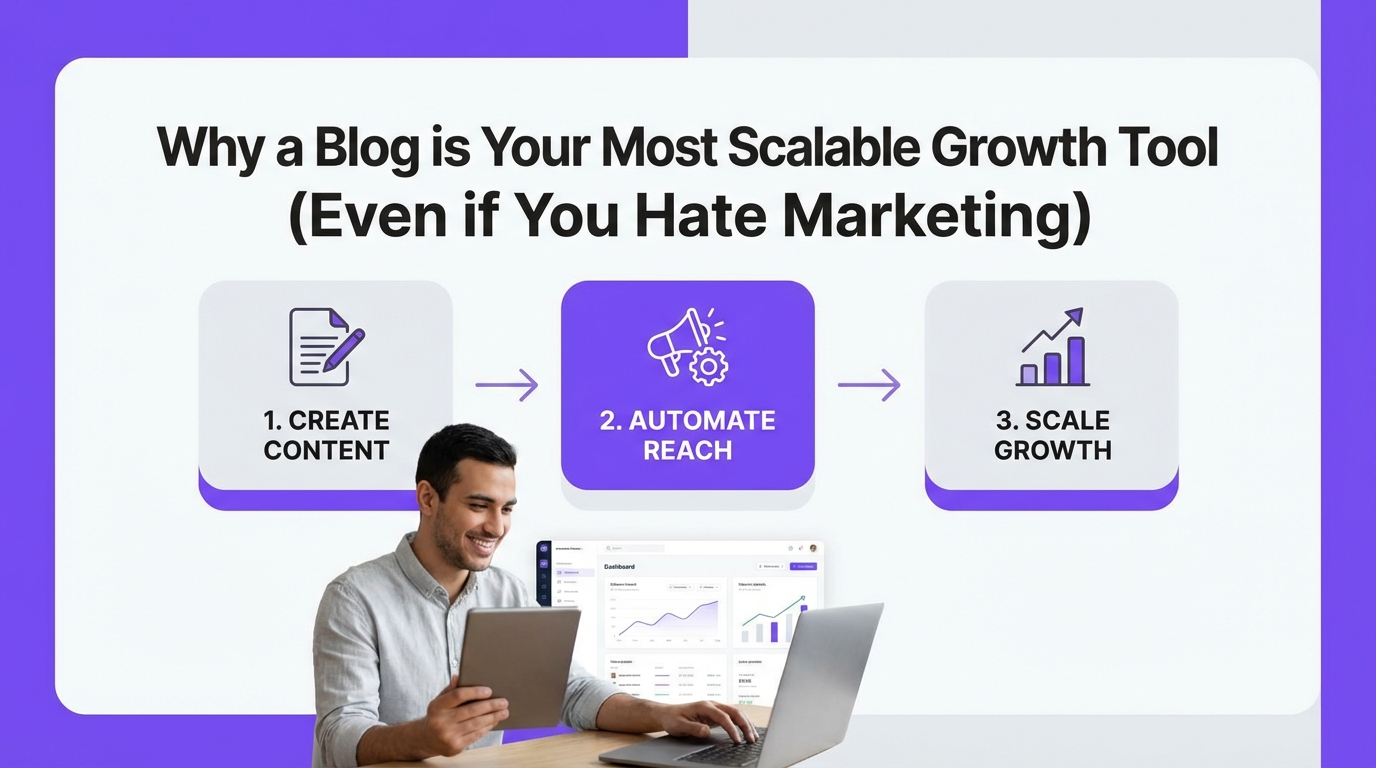
For most business owners, the word "marketing" doesn't spark excitement—it sparks a headache. It usually brings to mind images of complex spreadsheets, expensive ad spend, and the exhausting pressure to stay "trendy" on social media. When you’re busy managing a team, refining your product, or keeping operations running smoothly, marketing often feels like a secondary chore that keeps sliding to the bottom of the to-do list.
But there is a fundamental shift happening in how businesses actually grow. The old outbound marketing methods—like cold calling or disruptive ads—are becoming more expensive and less effective by the day. In their place, inbound content has emerged as the most reliable way to build a sustainable business.
At the heart of this shift is the blog. Far from being a digital diary, a well-executed blog is a high-performance engine for growth. Here is why blogging is the single most important move for a modern business owner, especially if you don’t consider yourself a "marketer."
Stop Renting Your Traffic—Start Owning It
Most online growth strategies for non-marketers rely heavily on paid advertising (PPC). While ads can provide a quick spike, they have a fatal flaw: the moment you stop paying, the traffic disappears. It’s a "pay-to-play" model that eats into your margins and leaves you with zero long-term equity.
A blog operates on a completely different logic. It is an appreciating asset.
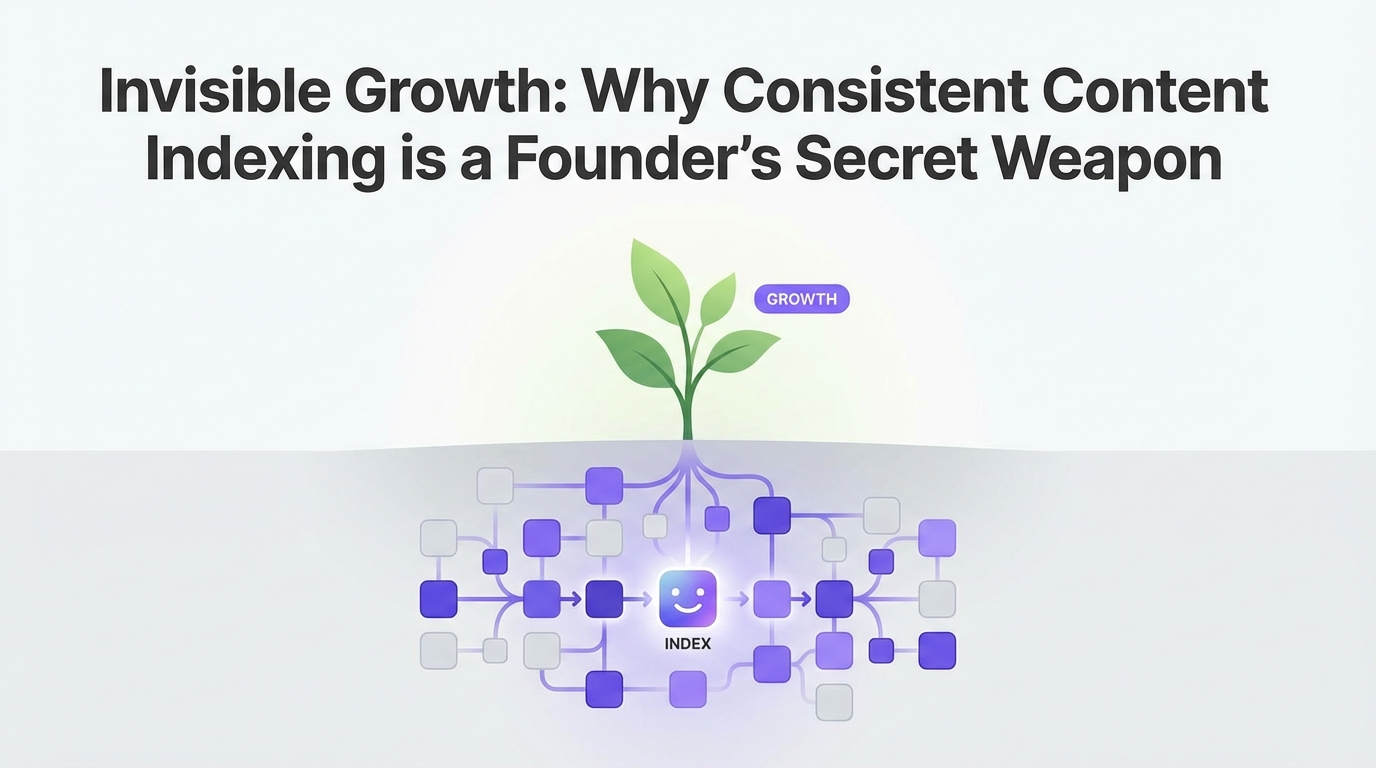
When you publish a helpful article that answers a customer’s burning question, that article stays on the internet forever. It works for you 24/7, attracting potential leads months or even years after you hit "publish." This is the concept of compounding content marketing: instead of renting space on someone else's platform (like Facebook or Google), you are building equity in your own digital headquarters.
The "Silent Salesperson": Building Trust on Autopilot
One of the biggest hurdles for any business is building trust with someone who has never heard of you. In the digital age, customers do their homework. Google calls this the Zero Moment of Truth (ZMOT)—the precise moment when a consumer researches a product prior to purchase.
By maintaining a blog, you are essentially "pre-selling" your visitors during this research phase. When you provide deep, helpful content that solves a small problem for them for free, you prove your expertise. You aren't just telling them you’re the best; you are demonstrating it.
For the non-marketer, this is a secret weapon. You don’t need to be a charismatic salesperson if your content has already convinced the prospect that you’re the authority before they even pick up the phone.
SEO Without the Technical Headache
You’ve likely heard of SEO (Search Engine Optimization), and it probably sounds like a technical nightmare. But at its core, SEO is simply about being the best answer to a user’s question.
Search engines like Google prioritize websites that are active and provide value. A static "brochure" website with only five pages (Home, About, Services, Contact) gives Google very little to work with. However, a blog allows you to target long-tail keywords—the specific phrases and questions your customers are actually typing into search bars.
For example, a plumbing business shouldn't just try to rank for the word "plumber." They should write a post on "How to fix a leaking copper pipe in an old house." That specific, helpful content attracts a niche audience that is highly likely to need professional services eventually. The data backs this up: companies that blog get significantly more leads because they are simply easier to find.
Create Once, Distribute Everywhere
A common mistake business owners make is trying to be everywhere at once: LinkedIn, Instagram, X, and newsletters. This is a fast track to burnout.
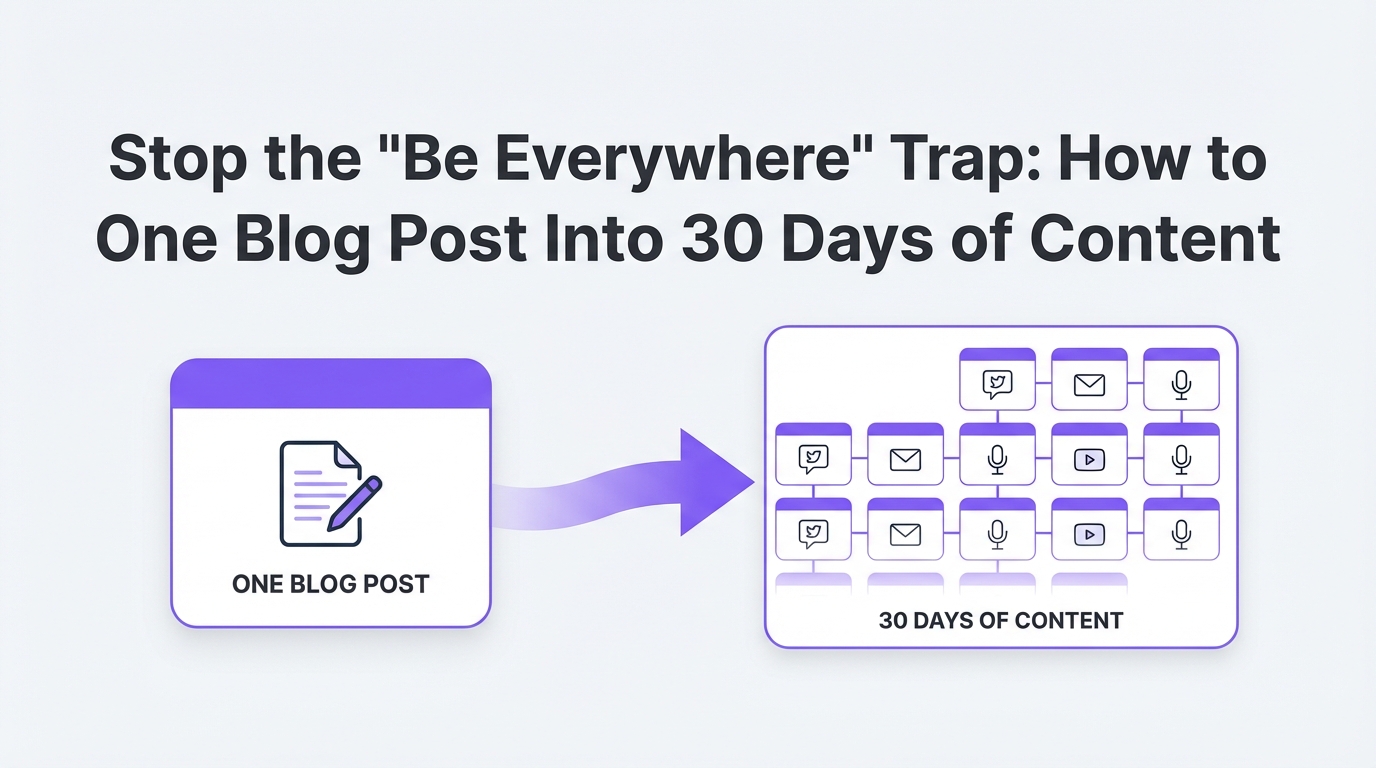
When you make a blog the foundation of your strategy, your growth becomes much more manageable. You stop being a "content creator" and start being a "content distributor." Through a process called content repurposing, a single, well-researched blog post can be:
- Broken down into five LinkedIn posts.
- Summarized for your email newsletter.
- Used as a script for a quick video.
- Sent to a prospect as a resource to answer a common question.
By focusing on one high-quality piece of "pillar" content, you create a library of material that fuels all your other channels.
Overcoming the "I Don't Have Time" Barrier
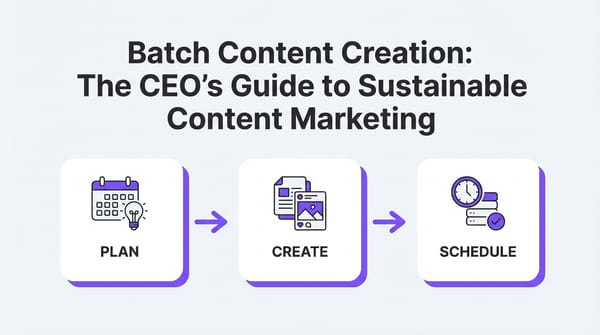
The biggest reason non-marketers fail at blogging isn't a lack of knowledge—it's a lack of time. Consistency is the "secret sauce," but when you're busy running a company, writing 1,000 words a week feels impossible.
This is where the landscape is changing. Technology is finally catching up to the needs of busy entrepreneurs. You no longer need to spend eight hours a week staring at a blank cursor or hire an expensive agency that doesn't "get" your industry.
Scalable growth in 2026 is about leveraging smart tools to handle the heavy lifting. Automation and AI-powered platforms can now help you maintain a professional, SEO-optimized blog without the manual labor. This allows you to reap the rewards—the leads, the trust, and the search rankings—while staying focused on the work you actually enjoy.
The Bottom Line
A blog is not a "nice-to-have" feature; it is the most effective way to build a resilient business in a crowded market. It turns your website from a static business card into a lead-generation machine that builds authority on autopilot.
If you’ve been sitting on the sidelines because you aren't a "marketer" or you're "too busy," it’s time to rethink your strategy. The best time to start building your digital equity was years ago. The second best time is today.
Struggling to find the time to keep your blog active? Lexly helps business owners automate their content marketing and SEO, turning your expertise into a growth engine without the manual effort.
Get actionable content marketing tips - straight to your inbox.
Join the Lexly newsletter for proven strategies, fresh content ideas, and AI marketing tips. No spam, just value.